
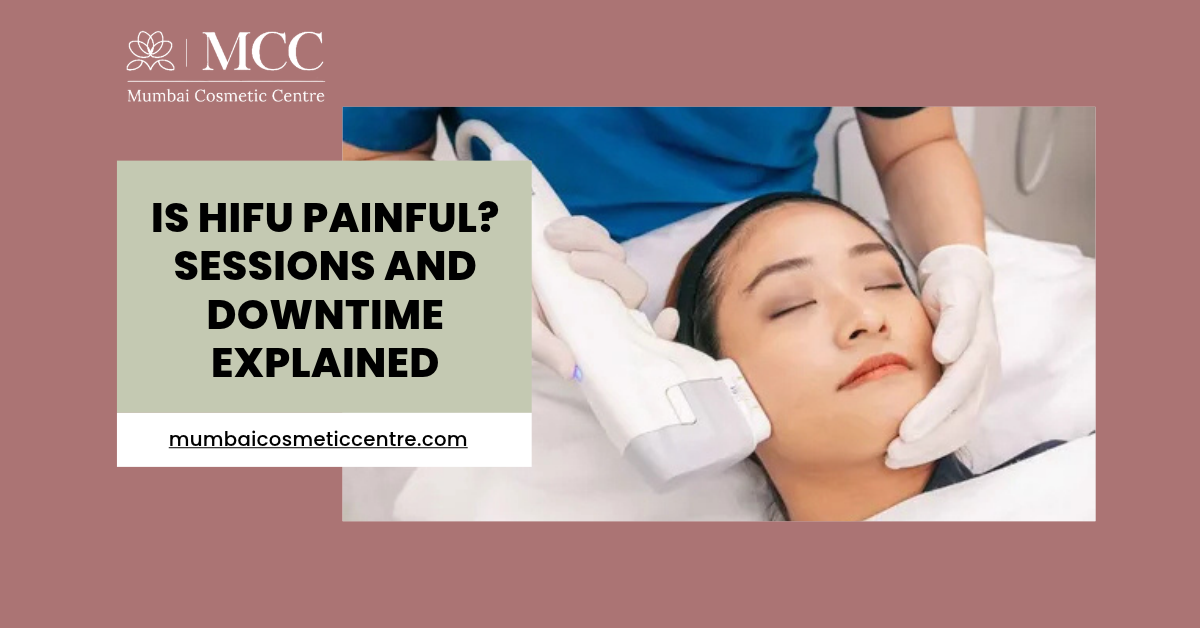
“Does HIFU hurt?” is one of the most common questions we hear before a patient books their first session. It’s a fair question, since HIFU does involve a genuine sensation — here’s an honest, detailed answer, along with what to expect for sessions and recovery.
What HIFU Actually Feels Like
HIFU delivers focused ultrasound energy beneath the skin’s surface, and most patients describe the sensation as:
- A warming or heating feeling as energy is delivered
- Brief, mild prickling or tingling with each pulse
- Occasional deeper warmth, particularly over bonier areas (like the jawline) where there’s less cushioning tissue

Pain tolerance varies by individual, but most patients tolerate HIFU well without needing local anesthesia, especially with a properly calibrated, quality device.
What Affects Comfort Levels
- Treatment depth — deeper settings (used for more significant tightening) can feel slightly more intense than shallower settings
- Area treated — areas with thinner skin or less underlying fat (like directly over bone) tend to be more sensitive
- Device quality — well-calibrated, medical-grade devices allow more precise, controlled energy delivery, which generally means a more comfortable, consistent experience
- Individual pain threshold — this varies naturally from person to person
How Long Does a Session Take?
Session length depends on the area treated:
- Smaller areas (like under the chin): often around 30–45 minutes
- Full face and neck: can take 60–90 minutes, depending on the number of energy lines delivered
What Downtime Really Looks Like
HIFU is genuinely low-downtime compared to surgical alternatives:
- Immediately after: Mild redness, warmth, or slight swelling in the treated area
- First few hours: Some patients notice mild tenderness, similar to a mild sunburn feeling
- First 1–2 days: Any redness or swelling typically settles; most people resume normal activities immediately, including work and social plans
- Rare, temporary effects: Occasional mild bruising or temporary numbness/tingling, usually resolving within days to a couple of weeks
Making Your Session More Comfortable
- Communicate with your provider during treatment — energy settings can often be adjusted for comfort
- Avoid caffeine right before your session if you’re sensitive to warmth-based sensations
- Some clinics offer numbing cream for particularly sensitive areas — ask your consultant if this is an option for you
Setting Honest Expectations
HIFU is not pain-free for everyone, but it is generally well-tolerated and does not require the recovery time associated with surgical procedures. Being upfront about this helps patients feel prepared rather than surprised on the day of treatment.
Frequently Asked Questions
1. Do I need numbing cream before HIFU? Not always — many patients tolerate it well without numbing, though it can be offered for more sensitive areas or lower pain thresholds.
2. How long does discomfort last after a session? Any mild tenderness or warmth typically resolves within a few hours to a day; it is not a lasting discomfort.
3. Can I go to work the same day as my HIFU session? Yes — most patients resume normal activities, including work, immediately after treatment.
4. Is the full face and neck more painful than a smaller area? Sensation is generally similar per pulse, though a longer session (like full face and neck) means more cumulative pulses over the session.
5. Will I need to take a day off for HIFU? Generally no — HIFU’s low downtime means most patients don’t need to plan time off work or social activities.
This article is for informational purposes only and does not replace a personal consultation.
Get an honest, personalized HIFU consultation. 📍 1st floor, Milap Apt, Opp Milap PVR cinemas, S.V. Road, Malad West, Mumbai – 400064 📞 +91 74001 88399 | Open 12pm–7pm, everyday, by appointment Schedule a Consultation Today — because you are worth it!
